
A LITTLE MORE ABOUT ME
I became a therapist because I was curious about what happens beneath the surface.
Long before I had language for nervous systems, attachment, trauma, or protective patterns, I was fascinated by people — what we carry, how we adapt, and what allows us to keep going through experiences that change us.
That curiosity eventually became the foundation of the way I practice therapy today.
I care less about asking, “What's wrong with you?” and much more about understanding, “What happened, what did you need, and what did your system learn to do with it?”

BEFORE THE THERAPY ROOM
My path here wasn't exactly traditional.
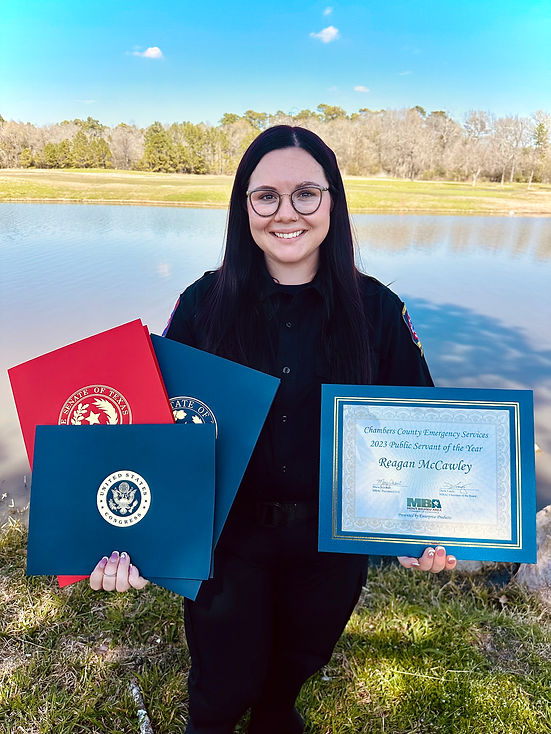
Before I ever sat in a therapist's chair, I was in the station. I entered emergency services young and learned pretty quickly that the job has its own language, its own humor, and its own way of teaching you how to keep moving. You can walk into one of the worst moments of someone's life, do what needs to be done, clear the call, and twenty minutes later be back at the station arguing about what everyone wants for dinner.
Sometimes that's resilience.
Sometimes that's compartmentalization.
Usually, it's probably a little bit of both.
I learned how quickly the abnormal can become normal. How easily “I'm fine” can actually mean I don't have the time, words, or energy to unpack that right now. How the people who are incredibly good at showing up when everyone else's world is falling apart can be really fucking bad at recognizing when their own world needs some attention.
But I also saw what makes this culture extraordinary.
I saw people show up for each other without needing to be asked. I saw dark humor make unbearable moments survivable. I saw trust built in the middle of chaos, families formed between people who never would have found each other otherwise, and an incredible capacity to walk toward things most people instinctively run from.
And somewhere in all of that, I became fascinated by what happens after the call is over.
Where does all of it go?
What allows one experience to move through us while another seems to stay?
Why can someone function incredibly well in chaos and then feel completely overwhelmed by something seemingly small at home?
What happens when the things that helped us survive start following us into places where we don't need them anymore?
Those questions eventually became bigger than emergency medicine for me. They led me toward peer support, trauma, nervous-system work, relationships, and eventually the therapy room. I don't believe having worn the uniform means I automatically understand another responder's experience. Every person, department, call, career, and nervous system is different. But I do understand the culture. And I understand that sometimes the thing keeping you alive, functional, useful, and damn good at your job can also be the thing making it harder to recognize when you're carrying too much.
That tension — between what helps us survive and what helps us actually live — became a huge part of why I do the work I do today.
BEHIND THE NAME
Where Bravery Meets Healing
It isn't pushing through everything without needing anyone. It isn't staying strong enough that nothing hurts. And it certainly isn't pretending you're okay when you're not.
Sometimes bravery looks like surviving. Sometimes it looks like finally admitting that surviving isn't how you want to spend the rest of your life. Sometimes it's setting a boundary, grieving what you lost, allowing yourself to need someone, questioning an old belief, staying in a difficult conversation, or sitting with an emotion you'd normally run from.
And sometimes bravery is simply becoming curious about yourself instead of judging yourself.
The Brave Line exists in that space — the place where the things that once helped us survive can finally be met with enough safety, compassion, and curiosity for something new to become possible.
THE HUMAN PART OF THERAPY
Therapy doesn't require either of us to stop being human.
I'm not particularly interested in being a blank wall sitting across from you.
You can expect warmth, curiosity, honesty, and humor when humor belongs in the room. I'll celebrate with you when something shifts, sit beside you when something hurts, and gently challenge you when I notice a pattern that might be worth looking at.
I may ask what happened in your body when you said something.
I may wonder aloud whether a reaction feels familiar.
I may ask what a younger or more protective part of you needs.
And there may be sessions where I say very little because your system doesn't need another person trying to make meaning out of something for you. I don't expect therapy to look the same every week because humans don't show up the same every week. You don't have to perform therapy here. You just have to arrive as you are.
the professional stuff
The human relationship matters. So does good clinical training.
Reagan McCawley, M.Ed., LMFT-Associate, LCDC
Supervised by Leila Anderson, LMFT-S.
Licensed Marriage and Family Therapist Associate
Licensed Chemical Dependency Counselor
Master of Education in Counseling and Development: Specialty in Marriage, Couple, and Family Counseling
Bachelor of Science in Psychology
My clinical work includes specialized training in trauma-informed and experiential approaches, with particular emphasis on Brainspotting, nervous-system awareness, relational work, attachment, and working with first responder and military populations.
AREAS OF CLINICAL FOCUS
Trauma & PTSD • Grief & Loss • Relationships & Attachment • Couples Therapy • High-Conflict Relationships • Addiction & Recovery • First Responder & Military Experiences • Anxiety • Depression • Identity & Life Transitions
APPROACHES THAT MAY INFORM OUR WORK
Brainspotting • Somatic Awareness • Parts Work • Attachment-Focused Therapy • Experiential Therapy • Narrative Approaches • Relational & Systemic Therapy
because therapists are human too
There is a whole human behind the therapist chair.
Outside of work, my family is the center of my world. Some of my favorite time is the ordinary kind — being with my husband and the people I love, laughing way too hard about something stupid, sharing meals, getting outside, and just being together without needing to accomplish anything.
I'm also usually finding something to do. I love golfing, being creative, starting projects I probably didn't need another project for, and finding ways to get outside and move.
And, of course, our family includes a few four-legged personalities who deserve their own introductions.
Rufus is our very spoiled pig — equal parts sweet, sassy, dramatic, and absolutely convinced that every decision made in our household should somehow involve him. He has strong opinions about meal times, coming inside, and the appropriate amount of attention he should receive.
Penny is a little ball of anxiety and love wrapped up in a surprisingly big bark. She may have some feelings about the world, but she has just as much love to give with them.
And Copper is mine and my husband's first four-legged baby. He's blind now, but that hasn't stopped him from being one of the sweetest souls around — and he still gives some of the best cuddles you'll ever get.
Life outside the therapy room keeps me connected to what matters most to me: family, love, laughter, connection, play, and being present for the ordinary moments that make up a life.


maybe we would work well together
I don't believe my job is to be the expert on you.
Reading an About page can tell you something about who I am and how I work — but it can't tell either of us what it will actually feel like to sit across from each other. That's what the consultation is for.
We can talk about what brings you here, what you're hoping for, and any questions you have about therapy. Then we can decide together whether working together feels like the right fit. And if it doesn't, that's okay too.
Finding the right therapist matters more than convincing you that I should be yours.
In-person in Mont Belvieu, Texas • Virtual sessions available throughout Texas